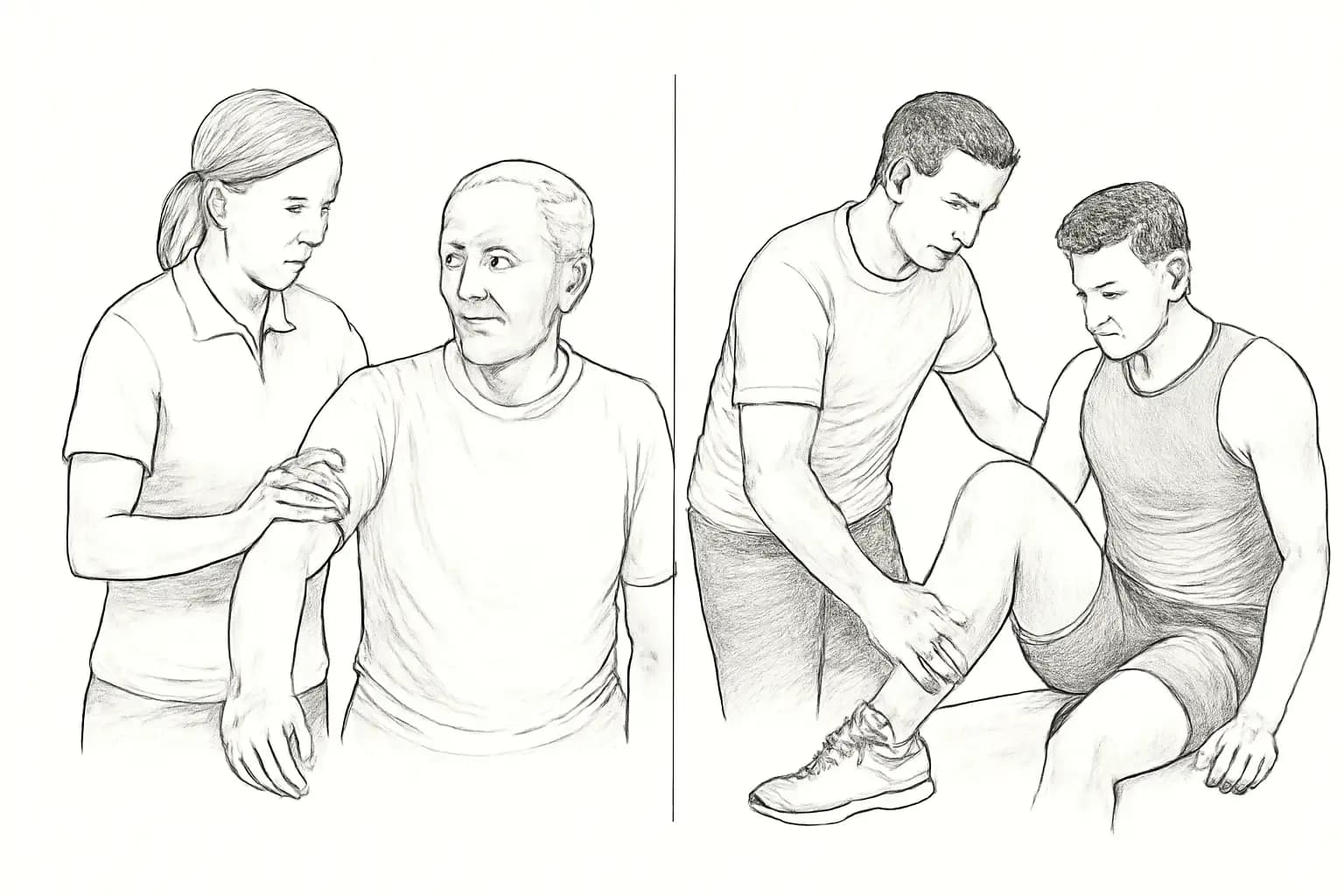
Physiotherapy and athletic therapy overlap in treating muscle, joint and soft-tissue injuries. Physiotherapists also train in neurological and cardiorespiratory rehabilitation, while certified athletic therapists specialize in musculoskeletal assessment, rehabilitation and emergency care. Athletic therapy is available to people of different ages and activity levels, not only athletes. The right choice depends on your condition, your goals and the individual provider’s experience. If you have a WCB or MPI claim, confirm coverage and treatment approval before booking.
Key Takeaways
- Physiotherapists are regulated health professionals with training across musculoskeletal, neurological and cardiorespiratory conditions. Certified athletic therapists focus on musculoskeletal injuries and emergency care for athletes and non-athletes.
- Both professions can support musculoskeletal rehabilitation, including some workplace injuries, accident injuries and post-surgical recovery. Provider expertise, referral instructions and claim approval matter when choosing care.
- Athletic therapists are trained for on-field emergency assessment and are often the first responder when an athlete goes down during a game.
- Both professions use hands-on manual therapy and personalized exercise programs to reduce pain and restore movement.
- Choosing between them depends less on which title sounds more credible and more on matching the provider's scope to your specific injury and situation.
Physiotherapy is a regulated health profession that assesses and treats movement dysfunction across the musculoskeletal, neurological, and cardiorespiratory systems, using manual therapy, exercise prescription, and patient education to restore mobility and reduce pain in people of any age or activity level.
What's the difference between physical therapy and sports therapy?
The main differences are scope, education and certification. Physiotherapy education includes musculoskeletal, neurological and cardiorespiratory rehabilitation. In Manitoba, the College of Physiotherapists of Manitoba regulates physiotherapists; the Canadian Physiotherapy Association is a professional association, not the provincial regulator. Athletic therapists complete specialized education in musculoskeletal assessment, rehabilitation and emergency care, with certification through the Canadian Athletic Therapists Association.
Both professions can assess and rehabilitate musculoskeletal injuries such as sprains, strains and tendon problems. Physiotherapy also includes neurological and cardiorespiratory rehabilitation. Not every practitioner offers every service: ask about experience with your condition, post-operative instructions and appropriate referrals.
Physiotherapy vs athletic therapy: a side-by-side comparison
- Scope of practice: Physiotherapy — Musculoskeletal, neurological, and cardiorespiratory conditions. Athletic therapy — Musculoskeletal assessment and rehabilitation for athletes and non-athletes.
- Typical settings: Physiotherapy — Clinics, hospitals, rehab centres, home care. Athletic therapy — Clinics, sports sidelines, training facilities and other settings.
- Insurance and claims: Physiotherapy — Extended health, WCB or MPI coverage depends on eligibility, approval and policy. Athletic therapy — May be covered by extended health, WCB or MPI; confirm approval and policy.
- Emergency response training: Physiotherapy — Not typically the primary focus. Athletic therapy — Trained in on-field emergency assessment.
- Best suited for: Physiotherapy — Musculoskeletal, neurological and cardiorespiratory rehabilitation, depending on practitioner expertise. Athletic therapy — Musculoskeletal injury rehabilitation, return-to-activity planning and sideline care.
Should I see a physio or sports therapist?
Match the provider’s expertise to your situation. For a muscle or joint injury, either a physiotherapist or a certified athletic therapist may be suitable. For neurological or cardiorespiratory rehabilitation, ask about a physiotherapist with relevant experience. For a workplace injury, motor vehicle accident or recent surgery, confirm the proposed treatment plan, your healthcare team’s instructions and any insurer approvals. Neither the job title nor the claim type alone determines the best provider.
Some people work with both professions during recovery. An athlete might receive immediate sideline care from an athletic therapist and then continue rehabilitation with an athletic therapist, physiotherapist or coordinated care team. With an ACL injury, for example, a return-to-sport plan should follow assessment, graded strengthening and any surgical instructions.
Common scenarios and the better fit
- Back pain or sciatica: a physiotherapist can assess symptoms and help determine appropriate care or referral. Choose a provider experienced with your presentation.
- Workplace injury with a WCB claim: WCB Manitoba has processes for physiotherapy and athletic therapy. Confirm provider eligibility, claim approval and billing arrangements.
- Motor vehicle accident with an MPI claim: MPI rehabilitation can involve physiotherapists or athletic therapists. Confirm coverage with your case manager and clinic; read about recovering after a motor vehicle accident.
- Recovering from surgery: select a provider experienced in your procedure and follow the surgeon’s rehabilitation instructions. Musculoskeletal rehabilitation may involve either profession.
- Acute sideline sports injury: athletic therapy, for immediate assessment and taping or bracing.
- Ongoing sport-specific rehabilitation: either profession may help. Relevant expertise, progress checks and appropriate return-to-sport criteria are key.
How to decide: a simple five-step check
- Identify whether your injury involves only muscles and joints, or also nerves, breathing, or a neurological component.
- Check if your recovery needs to connect to WCB, MPI, or another insurance program.
- Consider whether you need emergency sideline assessment or a structured, ongoing recovery plan.
- Think about whether pain has become chronic, since that usually calls for a broader assessment.
- If you are still unsure, book an assessment. A clear plan starts with listening, and a proper evaluation will point you toward the right discipline even if you started in the wrong place.
If you are not sure your symptoms warrant a visit at all, reviewing the signs it's time to see a physiotherapist or reading what physiotherapy is and when to use it can help you decide before you book anything.
Who should choose which
Choose a physiotherapist with relevant experience when you need neurological, cardiorespiratory or musculoskeletal rehabilitation. A certified athletic therapist can be a suitable choice for musculoskeletal injury rehabilitation and on-field emergency care, whether or not you play sport. For chronic pain, surgery or a WCB/MPI claim, ask about experience, treatment goals and coverage rather than choosing by title alone. Pro Motion Physiotherapy in St. Vital, Winnipeg can assess your needs and discuss a recovery plan or an appropriate referral.
Learn more about Pro Motion Physiotherapy
This article is published by Pro Motion Physiotherapy. Visit promotionphysiotherapy.ca.
Sources and further information
- College of Physiotherapists of Manitoba
- Canadian Athletic Therapists Association: Athletic Therapy Is for Everyone
- MPI: Injury rehabilitation
- WCB Manitoba: Service code manual
This article provides general information and does not replace an individual assessment. Confirm current treatment approval and coverage with your insurer and clinic.