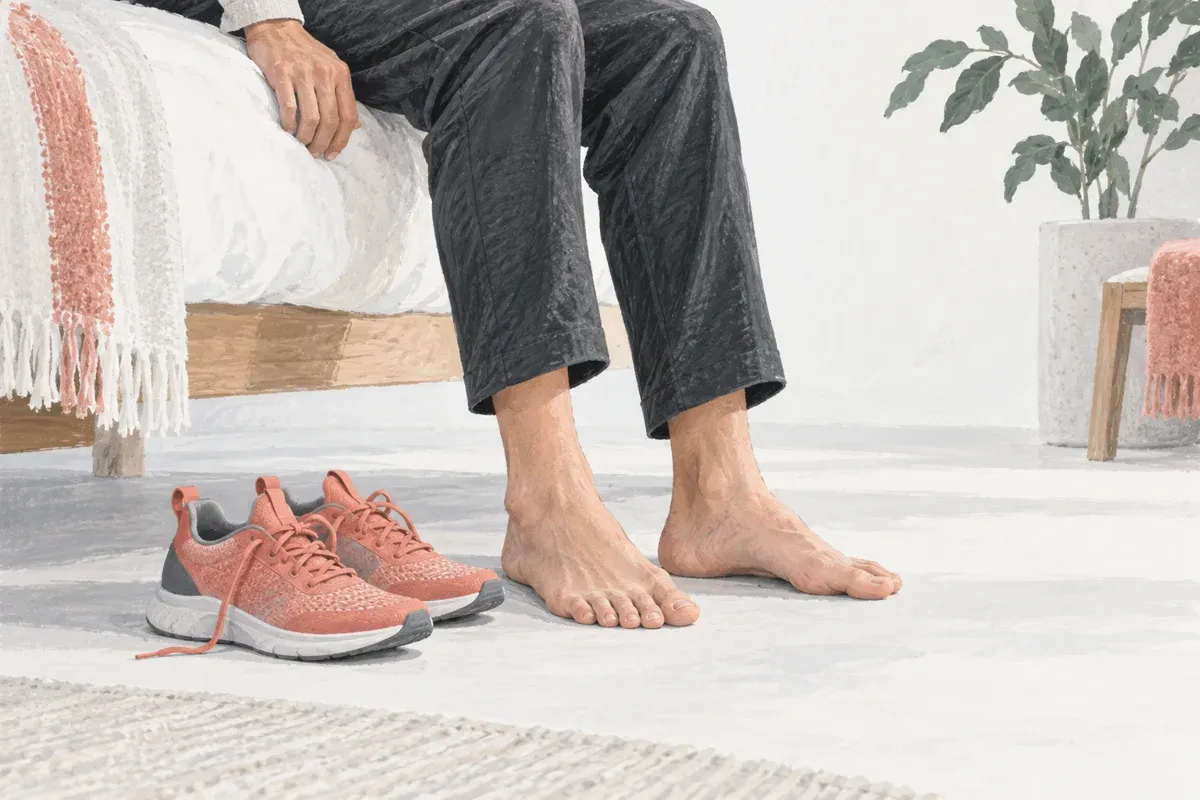
By Pro Motion Physiotherapy · Patient information
Is first-step heel pain always plantar fasciitis?
Pain under the heel or arch that is worse with the first steps after sleep or rest can occur with plantar fasciitis. That pattern is a clue, not a diagnosis. Describe the location and timing of your pain instead of assuming its cause.
For an appointment, distinguish pain underneath the heel from pain at the back or elsewhere in the foot. If you find it difficult to explain, you can point to the area during your assessment.
Record the pattern, not just a pain score
Make a brief note of how your foot feels when getting up, during ordinary walking and later in the day. Include how long you can comfortably stand and whether one or both feet are affected.
List recent changes that may be relevant to the conversation: a different job routine, longer walks, a new sport or different shoes. These details are useful context, but they do not establish what caused the problem. Avoid doing extra walking simply to test your symptoms.
What should you bring?
Bring the shoes you use most often, or clear information about them, and mention any inserts or supports you already use. If you have several types of footwear for work and recreation, explain when you wear each.
Write down what you have already tried and what happened. If a doctor has assessed your foot, bring any advice or reports you have. Mention other health conditions that could affect foot care, including diabetes, and any change in sensation.
When to seek medical advice
The NHS recommends medical review if heel symptoms are severe, worsening, recurring or preventing normal activities, or if there is tingling or loss of feeling. Foot pain in someone with diabetes also warrants medical advice. Seek assessment if symptoms are not improving rather than repeatedly changing self-treatment.
Questions about walking, footwear and rehabilitation
Ask what the assessment suggests, whether further medical input is needed, and what a sensible activity plan looks like for your situation. Be specific about unavoidable standing at work, caring responsibilities or walking to transport.
Before buying new shoes, inserts or exercise equipment, ask what purpose they would serve and whether they are appropriate for you. If an exercise is recommended, ask for a demonstration and instructions on how to respond if symptoms change. There is no single exercise prescription in this guide.
Agree on a practical goal, such as a necessary daily walk, and ask when to review it. This keeps follow-up focused on your needs rather than a promised recovery date.
Arrange an assessment in St. Vital, Winnipeg
Pro Motion Physiotherapy is at Unit 4, 567 St. Anne’s Road, in Meadowood, St. Vital. Our foot and ankle physiotherapy page explains the service available. When booking, describe the problem you want assessed and mention any recent injury, surgery or advice from another healthcare professional.
Use our online booking portal or call (204) 560-2999 for help selecting an appointment. The first-visit guide below explains how to prepare. Ask reception about any assistance you need before arriving.
Sources and further information
General appointment information, not an individual assessment or a guarantee of insurance coverage. Confirm current arrangements with the clinic and your insurer.